Chinese researchers develop cannabis-based molecule with strong pain relief, fewer side effects

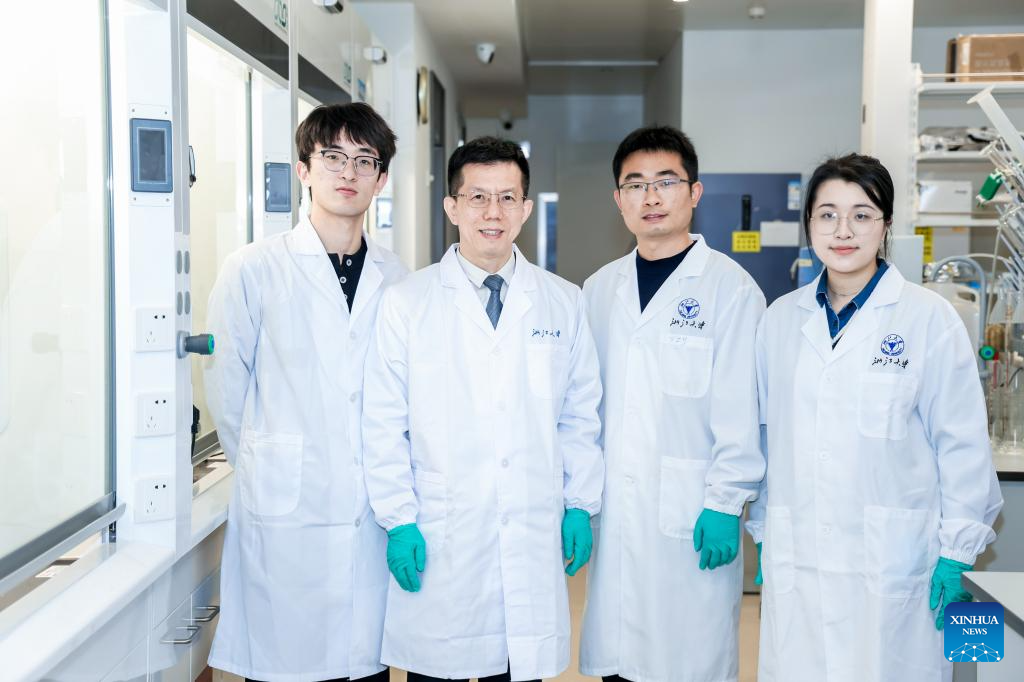
Li Xiaoming (2nd L) poses for a group photo with members on his research team at Zhejiang University in Hangzhou, east China's Zhejiang Province, March 25, 2026. (Zhejiang University/Handout via Xinhua)
HANGZHOU, April 15 (Xinhua) -- A Chinese research team has developed a new molecule that provides strong pain relief with far fewer side effects than traditional cannabis-based medicines, which are widely used for pain and mood disorders but often cause tolerance, addiction and cognitive impairment.
The discovery is considered a breakthrough that could help harness the medical value of cannabis more safely. The research was led by Li Xiaoming from Zhejiang University in collaboration with Dong Xiaowu and Zhang Yan, with the findings published in the journal Cell on Monday.
Since 2015, researchers have focused on the therapeutic effects of cannabis and decoded the underlying neural mechanism. They identified that the cannabinoid receptor 1 (CB1) plays a key role in several brain regions. In the amygdala, one of the brain's emotion centers, reduced CB1 function leads to anxiety and depression, and activating CB1 here can relieve these conditions. In the thalamus, a pain relay station, CB1 controls the pain threshold and is the main target for cannabis-induced pain relief.
Traditional cannabis drugs activate CB1 receptors but do so in a way that triggers two different signaling pathways. The Gi/o signaling pathway produces pain relief and anti-anxiety effects, which are the desired therapeutic outcomes. However, the β-arrestin signaling pathway causes tolerance, addiction, and other side effects. Importantly, the same receptor can produce both signals at the same time or alternately.
Using artificial intelligence, the team rationally designed new small molecules to activate only the Gi/o signaling pathway and avoid triggering the β-arrestin pathway. These agonists bind to the receptor in a way that avoids the structural clashes typically associated with side effects, ensuring a safer therapeutic profile.
In mouse experiments, the new molecules showed strong pain-relieving effects across tests for acute, inflammatory and neuropathic pain. Notably, the mice did not develop noticeable tolerance or signs of addiction after seven days of continuous administration. The compounds also caused far fewer side effects on body temperature and movement compared with traditional cannabis drugs.
A reviewer called the paper "elegant work" and noted that it is the first to rationally design a biased CB1 agonist. The new molecule offers a potential alternative that preserves the medical benefits of cannabis while avoiding its narcotic risks.
The team plans to continue research and move toward clinical trials. "We aim to understand disease mechanisms, find therapeutic targets, and develop effective drugs to ultimately relieve the suffering of patients," Li said. ■


